


Bichectomy
Refining the face and sculpting contours naturally
Bichectomy is a facial aesthetic surgery procedure that refines the oval of the face and creates more sculpted contours. In Geneva, this procedure is increasingly requested by patients wishing to achieve a slimmer face, enhance cheekbones and reduce the fleshy appearance of the cheeks.
Unlike temporary aesthetic medicine treatments, bichectomy offers a permanent, natural result that evolves harmoniously with facial aging.
This quick and easy procedure redefines facial contours without leaving visible scars, for an elegant, balanced result.
What is a bichectomy?
Bichectomy is a surgical procedure that involves partial or total removal of the Bichat’s balls, two fatty masses located in the cheeks between the masseter muscle and the facial mimicry muscles.
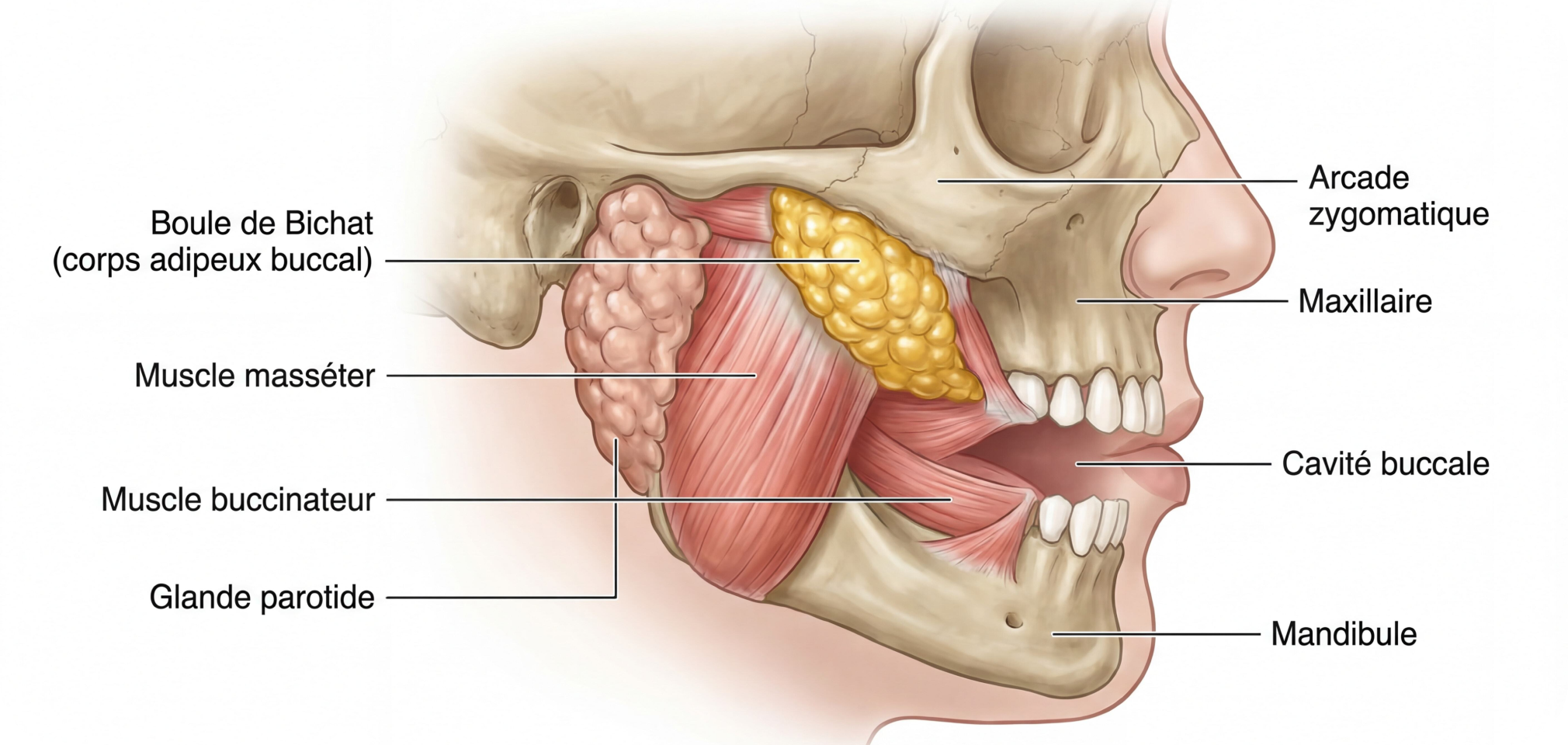
These balls of fat are present in all individuals, but their volume varies from one person to another. In some patients, they contribute to a rounder appearance of the face, even in the absence of overweight.
By removing these fatty deposits, bichectomy makes it possible to :
- Refining the oval of the face;
- Sculpting the contours of the cheeks;
- Enhance cheekbones;
- Create a sleeker, more harmonious face;
- Obtain a “V-shaped face” effect.
The aim is not to deepen the face excessively, but to reveal a more defined and balanced facial structure.
Who is bichectomy intended for?
Patient profile
- This procedure is particularly suitable for people who :
- Have a naturally round face
- Want to slim their cheeks without losing weight
- Want to highlight their cheekbones
- Looking for a more sculpted, slimmer face
- Slight cheek asymmetry
- Are not satisfied with the results obtained with aesthetic medicine
Ideal age
Bichectomy can be performed as early as adulthood, generally from the age of 20-25, when the facial structure is fully developed. It is particularly effective in young and middle-aged patients.
Important: This procedure is not recommended for people with a naturally thin or hollow face, as it may accentuate an emaciated appearance over time.
Intervention planning
Preoperative consultation
During the consultation, the surgeon performs a complete analysis of your face to determine whether bichectomy is suitable for your morphology. Several elements are evaluated:
- Volume of Bichat balls: Estimated amount of fat to be removed ;
- Muscle volume: Estimation of masticatory muscle thickness;
- Bone structure: Analysis of cheekbones and jaw ;
- Face proportions: Balance between upper, middle and lower face ;
- Skin elasticity: Capacity for skin retraction after surgery ;
- Aesthetic expectations: Desired results and realistic objectives.
How does the procedure work?
Type of anesthesia
Bichectomy is generally performed under local or general anesthesia, depending on the patient’s preference and the surgeon’s advice.
Surgical technique
The procedure is performed entirely through the inside of the mouth, ensuring that there are no visible scars on the face.
Intervention steps :
- Intraoral incision: The surgeon makes a small incision of about 1 to 2 cm inside each cheek, at the level of the buccal mucosa.
- Locating Bichat balls: Fatty masses are identified and delicately exposed.
- Fat removal: An appropriate amount of fat is removed from each side, taking care to preserve symmetry.
- Closure: Incisions are closed with absorbable stitches that disappear naturally in 7 to 10 days.
Intervention time: between 30 and 60 minutes
The procedure is performed on an outpatient basis, which means that you can go home the same day, accompanied by someone you trust.
Recovery from surgery
The first days
After bichectomy, it is normal to observe certain temporary effects:
- Edema (swelling) of the cheeks: Normal and expected, it may give the impression that the face is rounder during the first few days.
- Slight bruising: Possible but generally unobtrusive
- Discomfort when chewing: Sensation of discomfort when moving the mouth
- Mouth sensitivity: Operated areas may be sensitive to touch
Recovery period
Recovery from bichectomy is generally rapid and well tolerated:
Period
What to expect
Days 1-3
Maximum edema, rest recommended
Days 4-7
Gradual reduction in swelling
Week 2
Return to near-normal appearance
Months 1-3
Visible gradual refinement
Months 3-6
Fully visible final results
Post-operative care
To promote optimal healing and minimize the risk of complications, it is essential to follow the surgeon’s recommendations:
Power supply :
- Prefer a soft, cold diet for 7 to 10 days
- Avoid hot, spicy or hard-to-chew foods
- Prefer lukewarm soups, purées, compotes, yoghurts and smoothies.
Oral hygiene :
- Use antiseptic mouthwashes 3 to 4 times a day after each meal
- Maintain gentle but rigorous dental hygiene
- Avoid touching the operated areas with the tongue or fingers.
Activities :
- Relative rest for the first 3 days
- Return to work possible after 3 to 5 days (depending on profession)
- Avoid sport for 2 to 3 weeks
- Avoid intense sun exposure for 1 month
Earnings trend
The result of bichectomy evolves progressively:
Immediately after the procedure: The face is swollen, but the result is not yet visible.
After 2 weeks: Swelling diminishes significantly, first signs of refinement appear.
After 1 month: The face begins to reveal its new contours, and refinement becomes visible.
After 3 months : The result is well defined, the tissues have retracted.
After 6 months: The final result is fully visible, with a harmoniously refined face.
The result of bichectomy is permanent, as the removed Bichat balls do not regenerate. The face retains its refined appearance over the years.
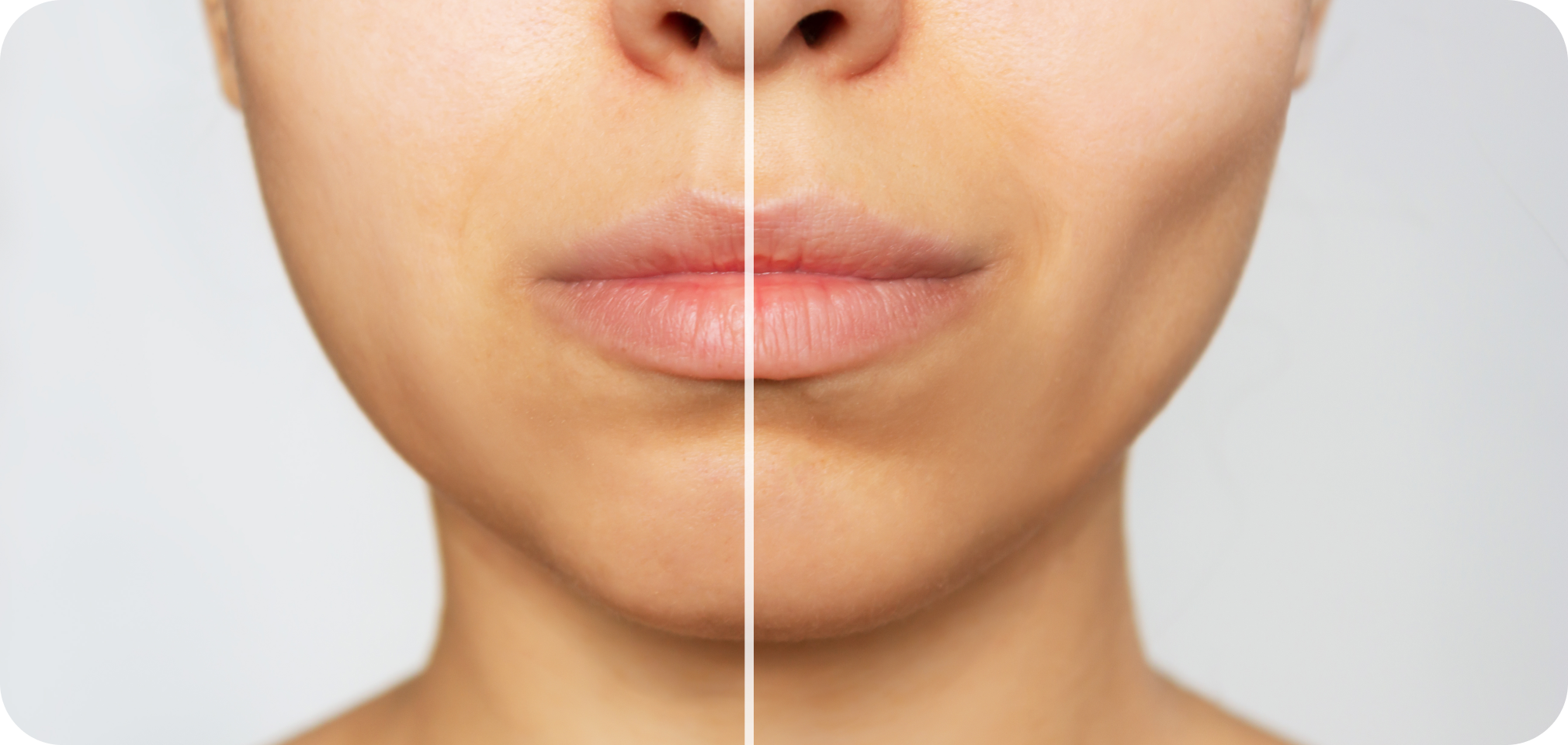
Obtaining a V-shaped face: Combining bichectomy with other treatments
For an even more harmonious, sculpted result, bichectomy can be combined with other procedures to create a V-shaped face, highly prized in aesthetic medicine.
Botox injection in the masseter muscles
Botulinum toxin (Botox) injection into the masseter muscles is a particularly effective complementary option. This technique reduces the volume of hypertrophied masseter muscles (jaw muscles), responsible for a square or too-wide face.
Botox relaxes these muscles, slimming the jawline and accentuating the V-shaped contour effect.
The result: a slimmer face, finer features and an elegant facial silhouette.
Other complementary interventions
- Cheek implant: Add volume to the cheekbones permanently, to accentuate the relief with custom implants.
- Resection of mandibular angles: Reduce the projection of jaw angles in the case of square-shaped jaws.
A personalized approach in Geneva
Every face is unique, and planning a bichectomy requires a precise analysis of your morphology. During the consultation, several elements are studied:
- Face proportions ;
- Volume of Bichat balls ;
- Skin elasticity ;
- Bone structure (cheekbones, jaw) ;
- Aesthetic expectations ;
- Non-surgical alternatives.
The aim is always to achieve a natural, balanced result that’s tailored to your face.