


Facial implants
Facial implants in Geneva: mandibular angle prostheses and cheek implants
Facial implants are a modern surgical solution for permanently improving facial harmony. In Geneva, this procedure is increasingly requested by patients wishing to structure the jaw, restore relief to the cheekbones or correct a lack of facial projection.
Unlike cosmetic medicine treatments, which are temporary, facial implants act directly on the bone structure, delivering stable, natural results over the long term.
This page explains in detail the indications, the procedure and the differences between facial implants and hyaluronic acid injections.
What is a facial implant?
A facial implant is a custom-made, biocompatible medical prosthesis (usually made of titanium or PEEK) designed to enhance the contours of the face. Placed in contact with the bone, it can augment certain strategic areas of the face to achieve a more balanced, harmonious profile.
Facial implants are often used for :
- jawline reinforcement
- increase cheekbone volume
- correct facial asymmetry
- restoring volumes lost with age
- improve overall facial balance
The aim is not to transform the face, but to enhance the patient’s natural structure.
Mandibular angle prostheses
Surgery to define the jaw
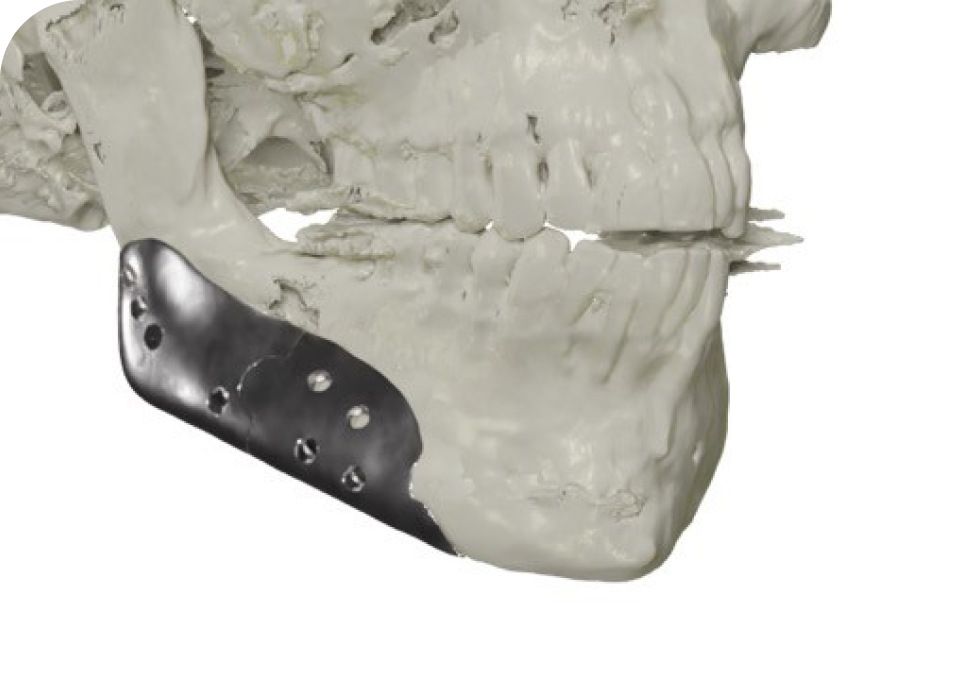
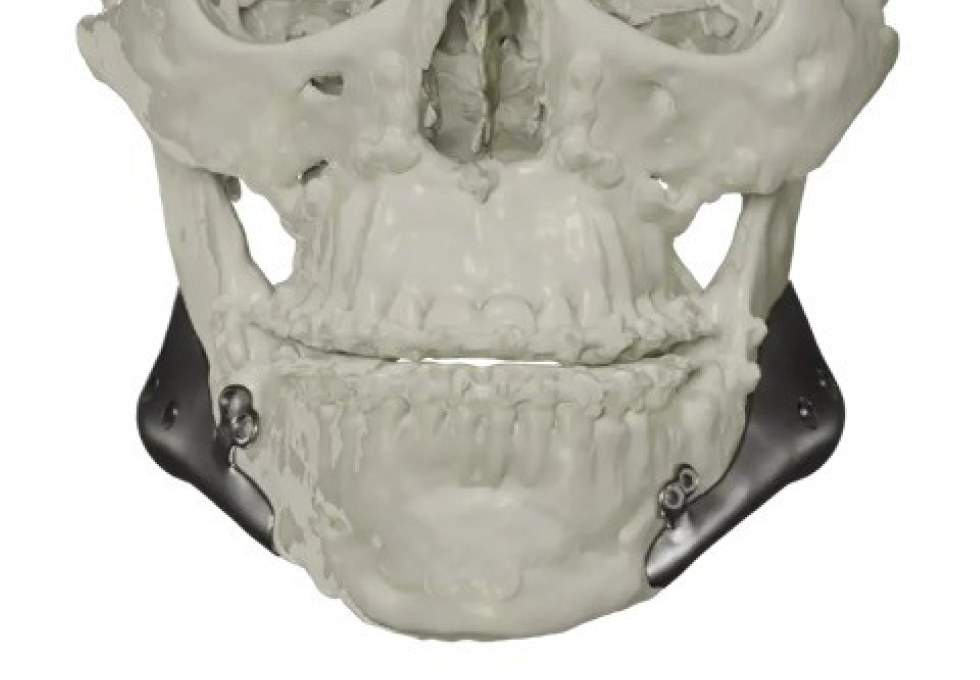
Mandibular angle implants increase the width and definition of the lower jaw.
This procedure is particularly effective when the lower face lacks structure or when the jaw appears too narrow.
In some patients, the jaw may appear unmarked despite good dental occlusion.
In this case, the implant helps to recreate a sharper, more balanced mandibular line.
This surgery is frequently performed on :
- patients who want a more defined jawline,
- men looking for a more structured jaw,
- patients with lower-face asymmetry,
- people for whom injections are not sufficiently effective.
How does the procedure work?
The procedure is generally performed through the inside of the mouth, to avoid visible scarring of the skin. After making an intraoral incision, the surgeon creates a precise space at the angle of the mandible to position the implant.
The prosthesis is then adjusted to the patient’s anatomy and stabilized with osteosynthesis screws. The entire procedure lasts on average between one and two hours under general anaesthetic.
Post-operative care
After surgery, swelling of the lower face is normal for a few days. The jaw may also feel tense or slightly stiff at first.
In most cases :
- fast recovery
- daily activities can be quickly resumed
- the results begin to emerge in just a few weeks.
The final result appears gradually as the tissues adapt to the new structure.
Cheek implants (malar implants)
Restore relief and rejuvenate the face
Cheek implants increase the volume and projection of the mid-face.
Cheekbones play a central role in facial aesthetics, as they play an important role in the perception of youthfulness and balance.
Some people have naturally low cheekbones.
Over time, there can also be a loss of volume, giving the face a more tired or hollowed appearance.
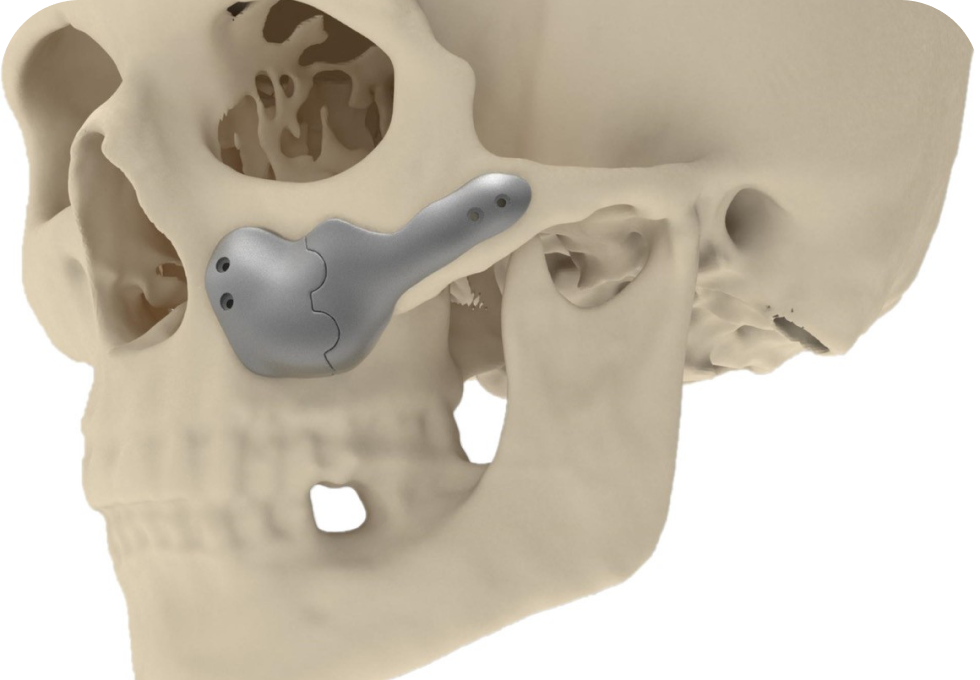
Malar implants can be used to :
- restore the face’s natural relief
- improve balance between upper and lower face
- support facial tissues
- give a more dynamic, harmonious appearance.
Surgery procedure
As with mandibular implants, the procedure is generally performed intraorally, which means that no scars are visible on the skin.
After analyzing the morphology of the face, the surgeon identifies the ideal area for the implant and custom-designs it to achieve the most suitable volume. The aim is to achieve a natural, proportionate result. The procedure generally lasts about an hour, also under general anaesthetic.
Recovery and results
After surgery, moderate swelling may appear in the cheekbones for a few days. This is normal and part of the healing process.
The volume of the cheekbones is visible immediately, but the result becomes optimal once the swelling has disappeared.
Most patients resume their social activities fairly quickly.
Facial implants or hyaluronic acid injections: which option should you choose?
Many patients in Geneva wonder whether they should opt for facial implant surgery or hyaluronic acid injections.
The two techniques have different indications and can sometimes be complementary.
Hyaluronic acid injections
Hyaluronic acid injections are an aesthetic medicine technique used to temporarily increase certain facial volumes. They are often used to improve cheekbones, jawline or correct hollows and folds.
This treatment is appreciated because :
- it’s fast
- it does not require surgery
- immediate results
However, hyaluronic acid is an absorbable product, which means that the result gradually disappears over time.
Facial implants
Facial implants offer a more durable solution. They are particularly suitable when the patient has a real lack of bone projection or is looking for a more structuring facial modification.
In certain areas, such as the jawline or cheekbones, injections may require large quantities of product to reproduce the effect of an implant. In these situations, surgery can offer a more natural and stable result over time.
Implants offer several advantages:
- lasting result
- improved facial structure
- better contour definition
- more precise correction of certain anatomies.
Is it possible to combine implants and injections?
Yes, in some cases it is possible to combine the two techniques. Implants help to structure the bone base of the face, while injections can refine certain details or improve the transition between volumes.
This personalized approach often produces a very natural result.
Facial implants in Geneva: a personalized approach
Every face is unique, and planning facial implants requires a precise analysis of the patient’s morphology. During the consultation, several elements are studied:
- face proportions
- bone projection
- symmetry
- aesthetic expectations
- non-surgical alternatives.
The aim is always to achieve a natural, balanced result that is adapted to the patient’s face.